
Ibex Electric Side Bending Iron with Small Pipe for Violin/Mandolin - 240v
In stock
SKU
TL-150-002
$795.00
Bending Irons have been used for centuries for bending the sides of musical instruments. They are are capable of producing very accurate bends and can be used to bend any shaped instrument.
The original bending irons were simply an iron bar heated with fire, while it worked it tends to either be too hot or too cool and not maintain an even heat.
These Ibex Electric Side Bending Iron are the best quality available. They make bending sides quick and accurate. They are temperature controlled so the temperature stays in a steady range, hot enough to easily bend the wood but not so hot it causes burns.
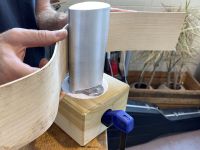
The cast aluminium pipe is in a cam shaped profile with curved and flatter areas that can be used for different shaped bends.
The CNC machined aluminium pipe has smaller radius ends than our standard version bending iron. It is ideal for bending the tighter curves in the sides of a violins, violas, and mandolins.
The cam-shaped profile of the pipe has curved and flatter areas that can be used for different shaped bends.
- Temperature controlled
- Ideal for Violin, Viola, Mandolin, Ukulele etc.
- 76mm (3") long CNC-machined aluminium pipe
- Cam-shaped pipe
- Metal base for added heat retention
- Timber base with clamp holes
- Suitable for 220-240volt
- Includes Australian plug adapter
- Made in USA
Related Products
We found other products you might like!
Ibex Side Bending Straps
Starting at $49.00
German Maple Violin/Viola Neck Blanks
Starting at $84.00
Power
Never set the Bending Iron on full power as it may burn out the element. It’s best to leave it set to 3/4 power (5-6 on the dial) all the time for general side bending.
Setup
Start by clamping the base of the Bending Iron to the bench. It can either be used with the pipe either horizontal or vertical.
Let the iron heat up for around 15 minutes before using it. It should be hot enough that when you spray a little water on it the water instantly turns to beads and bounces off the iron.
Technique
There are a few methods for bending and it may take a bit of practice do develop your preferred method.
Usually you bend the side a little section at a time. Start with the tightest bends and and work around the other bends from there. Rocking the side around a section of the iron 30-80mm wide helps spread the heat over a bigger section of the side, this works especially well for shallow bends. Use the flat sides of the iron for the flatter parts of the side.
Cooling
The permanent shape is actually formed by the cooling of the timber rather than the heating. It’s important to hold the side in shape after bending a section on the iron and let it cool down for at least a few minutes. It can either be held by hand or in a jig.
Water
Do not use too much water as it can be hazardous. The most you should use is a light spray on the wood or a damp rag. Water is usually used during bending but the wood can also be pressed directly on the iron without water for touching up bends or for bending bindings.
A damp rag or ‘chux wipe’ can be used between the iron and the sides. This does an excellent job of transferring the heat and putting moisture in the wood to aid the bending.
Timing
You don’t want to bend too fast as the wood needs time for the heat to soften the fibres before it will conform to a bend.
It’s also possible to use too much heat and water for too long and actually start to soften the fibres of the wood too much and and make it more prone to the grain lifting and splitting. This is especially a problem in figured timbers. It’s good to work as quickly as possible so the wood doesn’t have too much time to be effected. If you feel this has happened stop bending and give the wood an hour to dry out and cool down before starting again.
Splitting
Splitting is an inevitable part of bending sides.
Some timbers are easier to bend than others and some figured timbers are very prone to splitting.
Splits can usually be glued using superglue and clamps. Leave the glue to dry for at least 1 hour. The superglue will hold the best and be the least visible glue under finish. It’s often possible to keep bending the side after gluing a split, just try to support the split area with a small block of wood held against it, so to doesn’t receive too much force.
Never set the Bending Iron on full power as it may burn out the element. It’s best to leave it set to 3/4 power (5-6 on the dial) all the time for general side bending.
Setup
Start by clamping the base of the Bending Iron to the bench. It can either be used with the pipe either horizontal or vertical.
Let the iron heat up for around 15 minutes before using it. It should be hot enough that when you spray a little water on it the water instantly turns to beads and bounces off the iron.
Technique
There are a few methods for bending and it may take a bit of practice do develop your preferred method.
Usually you bend the side a little section at a time. Start with the tightest bends and and work around the other bends from there. Rocking the side around a section of the iron 30-80mm wide helps spread the heat over a bigger section of the side, this works especially well for shallow bends. Use the flat sides of the iron for the flatter parts of the side.
Cooling
The permanent shape is actually formed by the cooling of the timber rather than the heating. It’s important to hold the side in shape after bending a section on the iron and let it cool down for at least a few minutes. It can either be held by hand or in a jig.
Water
Do not use too much water as it can be hazardous. The most you should use is a light spray on the wood or a damp rag. Water is usually used during bending but the wood can also be pressed directly on the iron without water for touching up bends or for bending bindings.
A damp rag or ‘chux wipe’ can be used between the iron and the sides. This does an excellent job of transferring the heat and putting moisture in the wood to aid the bending.
Timing
You don’t want to bend too fast as the wood needs time for the heat to soften the fibres before it will conform to a bend.
It’s also possible to use too much heat and water for too long and actually start to soften the fibres of the wood too much and and make it more prone to the grain lifting and splitting. This is especially a problem in figured timbers. It’s good to work as quickly as possible so the wood doesn’t have too much time to be effected. If you feel this has happened stop bending and give the wood an hour to dry out and cool down before starting again.
Splitting
Splitting is an inevitable part of bending sides.
Some timbers are easier to bend than others and some figured timbers are very prone to splitting.
Splits can usually be glued using superglue and clamps. Leave the glue to dry for at least 1 hour. The superglue will hold the best and be the least visible glue under finish. It’s often possible to keep bending the side after gluing a split, just try to support the split area with a small block of wood held against it, so to doesn’t receive too much force.
| Manufacturer | Ibex |
|---|---|
| Material | Aluminium , Wood |
| Tool Type | Bending Iron |